
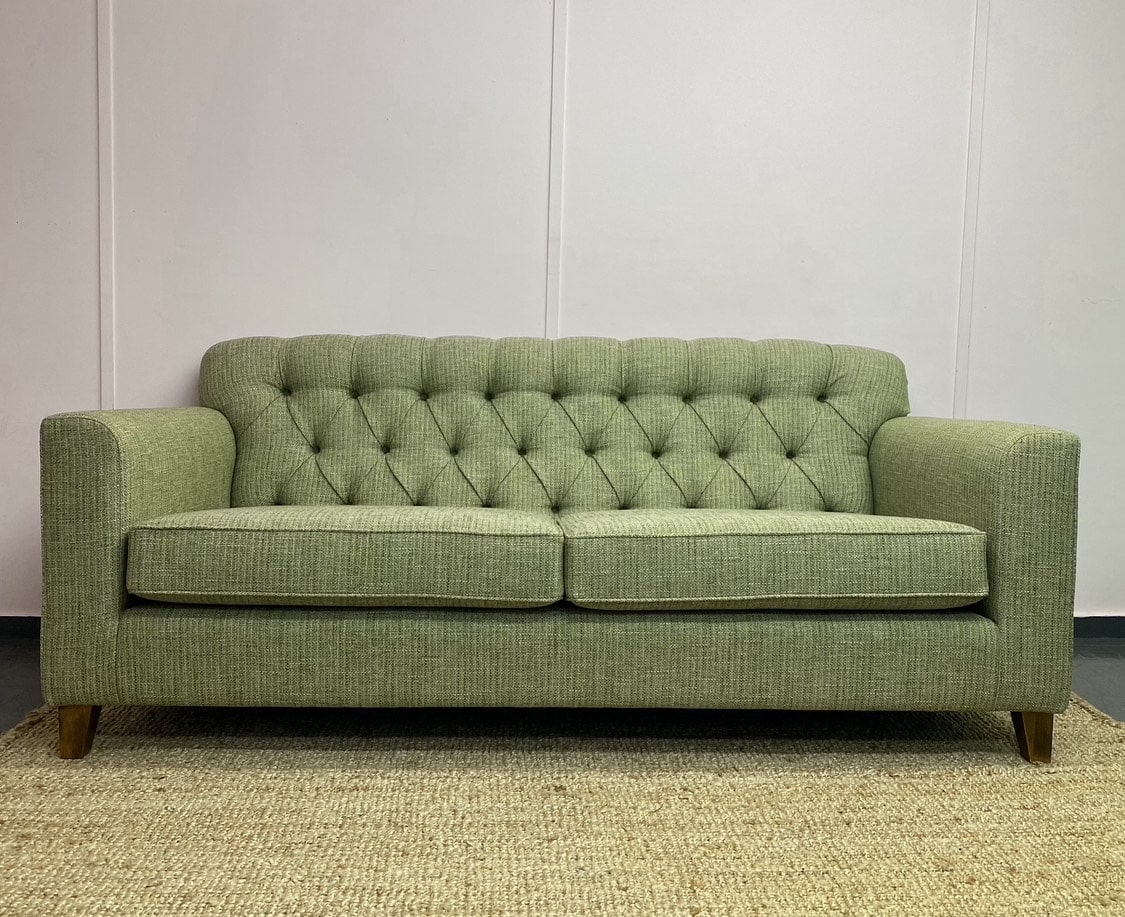
From Leather to Linen: Upholstery Maintenance Guide
When you’ve invested in having your furniture reupholstered, taking small steps to care for it will ensure that your furniture stands the test of time, a little care can go a long way.
You may be delighted with the results that your upholsterer has produced on your sofa or chair and it completely transforms the feel of your room, but that can change quickly without proper care.
So, I wanted to share the most effective tips, tricks and methods for maintaining your upholstery and ensuring it lasts a decade or more.
From dealing with leather to the handling of velvet, I’ll guide you through the essentials of keeping your reupholstered furniture in prime condition.
General upholstery maintenance tips
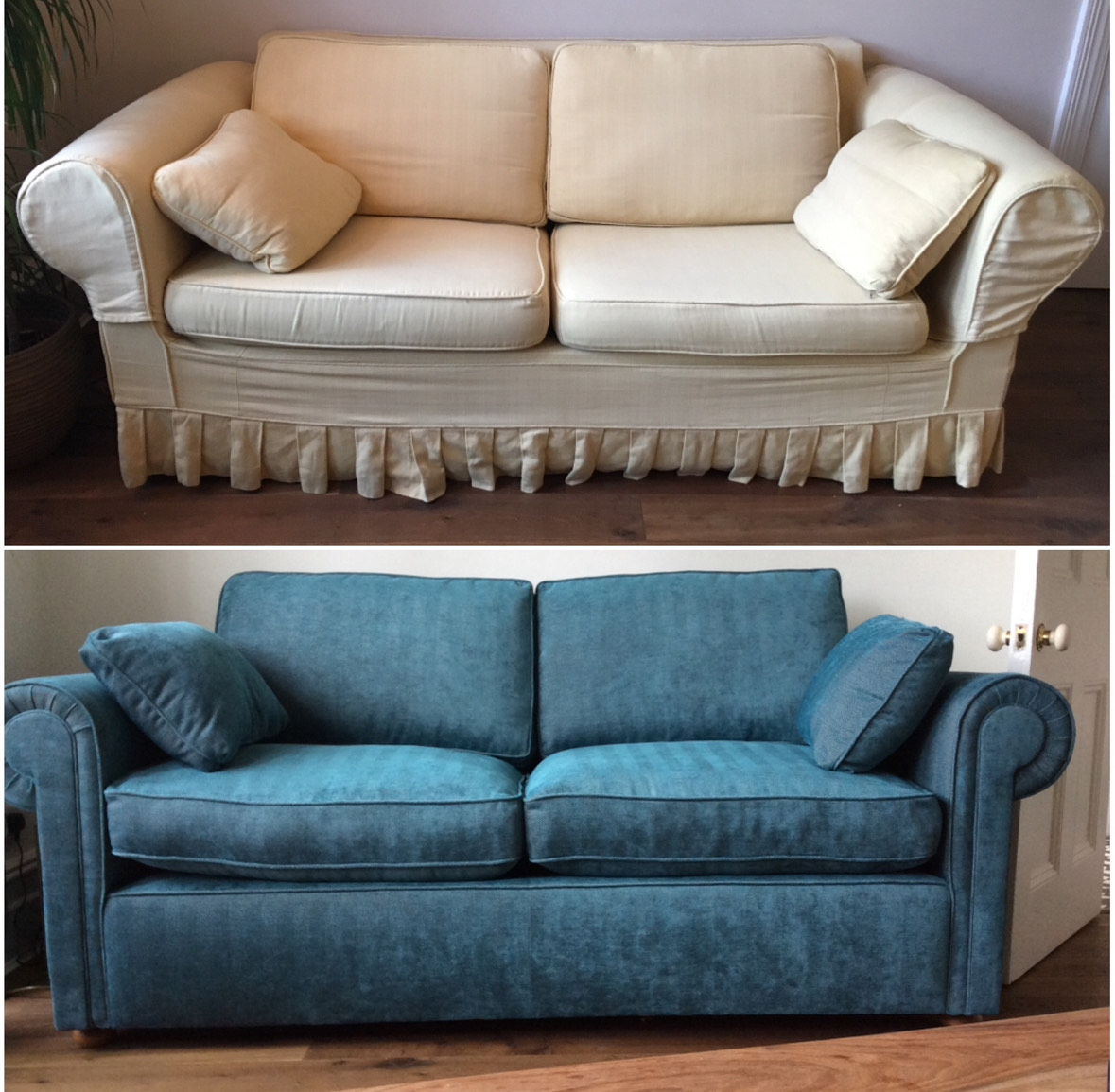
Before and after of a loose covered reupholstered sofa
Location of your furniture is something to look out for. I would never advise putting a sofa against a radiator, not only because it’s a fire risk, but also because the heat will damage the fabric.
Similarly, if particular fabrics, such as cotton or linen, are exposed to too much UV light, they can fade quickly, so it’s worth keeping them away from large windows or getting a UV glass protector to put on the window pane, which won’t block any light but it acts as a UV filter, protecting the colour in your fabric
When it comes to dining chairs in particular, I can’t tell you how many dining chairs I repair due to people swinging back on them. Where the back meets the seat is a joint so that’s the section that will take all the weight of someone swinging back.
Also always avoid sitting on the arms or backs of your sofas and chairs because again they are connected by joints, some may have springs and they will get damaged.
“Regularly rotate cushions and plump them”
This is even more important if it’s a modern sofa or chair as those joints tend to be stapled, rather than being glued with dowels or tenons, so they are even weaker. Older furniture is made far better, but the same rules still apply if you want the frame to stay robust.
An easy maintenance tip to lengthen the life of your furniture and its fabric is to regularly rotate cushions and plump them, especially if the filling is feather or hollowfibre. Most cushions on a high use sofa or chairs should last around eight years if looked after, so after that time it may be a good idea to replace the cushions to prolong the life and comfort of your sofa or chairs.
And if you’re buying a new sofa or getting it reupholstered, this may sound obvious, but make sure your removable seat and back cushions have fabric on both sides.
I’ve recently recovered a Habitat sofa and it only had fabric on the top of the cushion. The underside of the cushion was a platform cloth with the word ‘Habitat’ printed on it, so the client hasn’t been able to turn her sofa cushions for 20 years. That’s a company saving money on fabric, which shouldn’t be the case when you consider the cost of the original sofa.
Special care for different fabrics
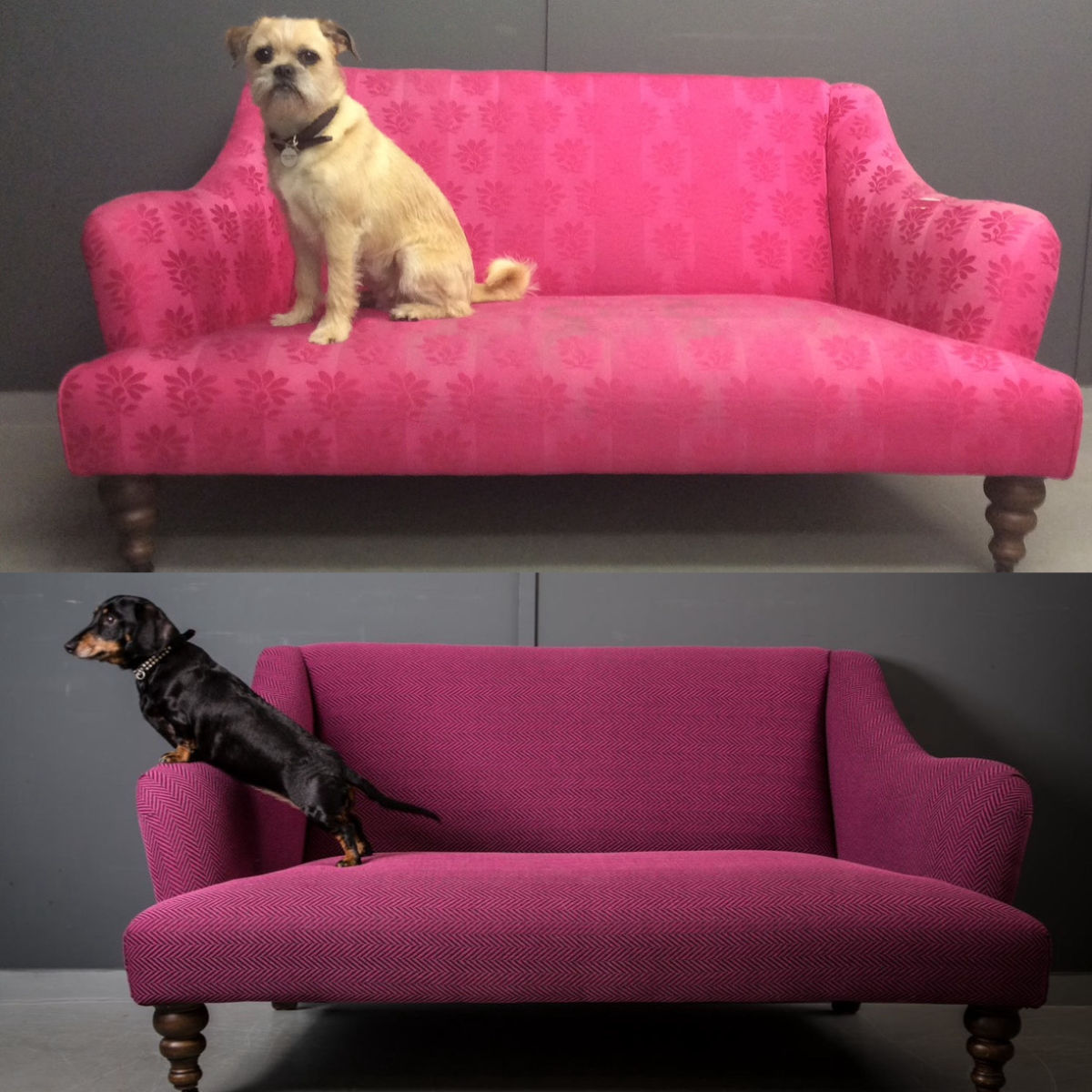
Be careful with your choice of fabric if you have a pet
Leather is one of those fabrics where you can’t just buy a leather sofa and then leave it, you need to look after it.
One of the best things about a leather sofa is it looks better as the patina ages, but it can also dry out, crack and discolour and the cracks will then turn into a rip or tear.
You can buy leather conditioning kits to avoid this that contain natural oils and will prevent your leather sofa drying out. Leather hide is a skin so it needs caring for, like you would your own skin.
But, a word of warning, make sure you’re buying the right kit for your leather sofa, because there are different types of leather. Not all leathers are the same because they go through a dying process, so you need to make sure that whatever kit you buy to maintain your leather isn’t going to react badly with the dye.
Or better still, call in an expert leather restorer who will treat your sofa once a year, and leave you with a kit to maintain it in between visits. This will mean your leather will last 20-30 years.
“Leather hide is a skin so it needs caring for, like you would your own skin”
Other fabrics require a similar level of caution, especially when you have furry family members, because they can get ruined quickly.
If you have pets, in particular a cat, you want to choose a fabric that can’t be easily shredded, for example a polyester velvet, which is the most resilient fabric out there and if it gets mud on it, you can just leave it to dry and then brush it off. Avoid anything woven as that’s like catnip to a cat.
A lot of people will opt for stain resistant fabrics or they’ll use Scotchgard to protect their fabric, but remember this is a chemical added and will evaporate into the air which you breathe in, plus Scotchguard isn’t a one and done, it needs to be regularly topped up on the fabric, so be careful if you have anyone with health conditions in the home.
Cleaning Do’s and Don’ts for reupholstered furniture
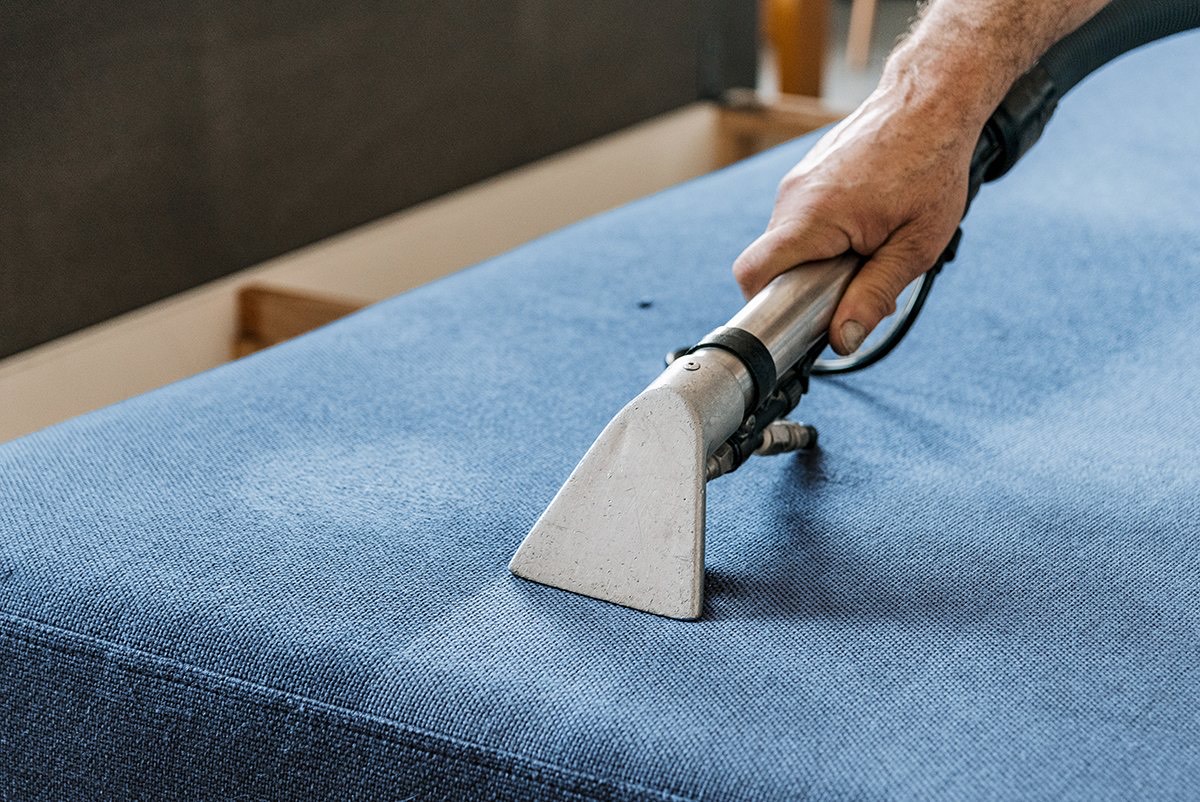
Always exercise caution when cleaning reupholstered furniture
Every day I see ‘cleaning hacks’ on social media for reupholstered furniture, for example, recently I saw someone using a sauce-pan lid, a microfibre cloth and a diluted dishwasher tablet to clean velvet sofas.
This may appear to be a brilliant ‘hack’, but if you do that on cotton velvet you will instantly ruin it, so be careful when it comes to following social media cleaning trends.
My recommendation would be; keep it simple. I use a hoover and an upholstery attachment on low speed and a microfibre cloth, gently rubbing to get the minute pieces of dust off my sofas and chairs, while giving them a buff.
You’ll find other suggestions online like using baking soda, vinegar and steam cleaners, but my advice would be to always test on a non-visible part of the sofa first before you try it on the rest.
You want to make sure you’re not removing the dye from the fabric and with natural products like cotton or linen, they’re hugely at risk of watermarks and embedding a stain, so you have to be really careful.
“Be careful when it comes to following social media cleaning trends”
Some people will get professionals in to clean their reupholstered furniture, but I have heard from clients that their sofas or chairs have been left with stripes where the fabric has been agitated too much, so always exercise caution.
Lastly there can be a temptation to go for furniture with loose covers which in theory gives you the option to remove and wash them. I have rarely seen a well fitted loose cover after it has been washed, plus fabric relaxes over time, so a loose cover which has no tension on it as it’s not fixed to a frame, will look baggy and unkempt very quickly.
I’m not a fan of loose covers, I much prefer picking a good fabric from the outset with no need for washing.
All fabrics are different and so they require different care, from the softest velvet to the toughest leather.
But, to keep your reupholstered sofa or chair looking its best for years to come, just remember to maintain it regularly, be cautious with cleaning techniques, the simpler the better, and a little effort can make a big difference.
So, here’s to many more years of enjoying your beautifully maintained upholstery!
And if you’re yet to take the leap to get your sofa reupholstered and if you need help creating a sofa with a combination of sophistication and practicality, drop me a line for an initial, no-obligation quote by filling in this online contact form or alternatively, you can email me directly at hello@test.vintiqueupholstery.com or call me on 07764 182 783.
Stay up to date
Keep up to date with the latest upholstery news and trends, delivered directly to your inbox.