
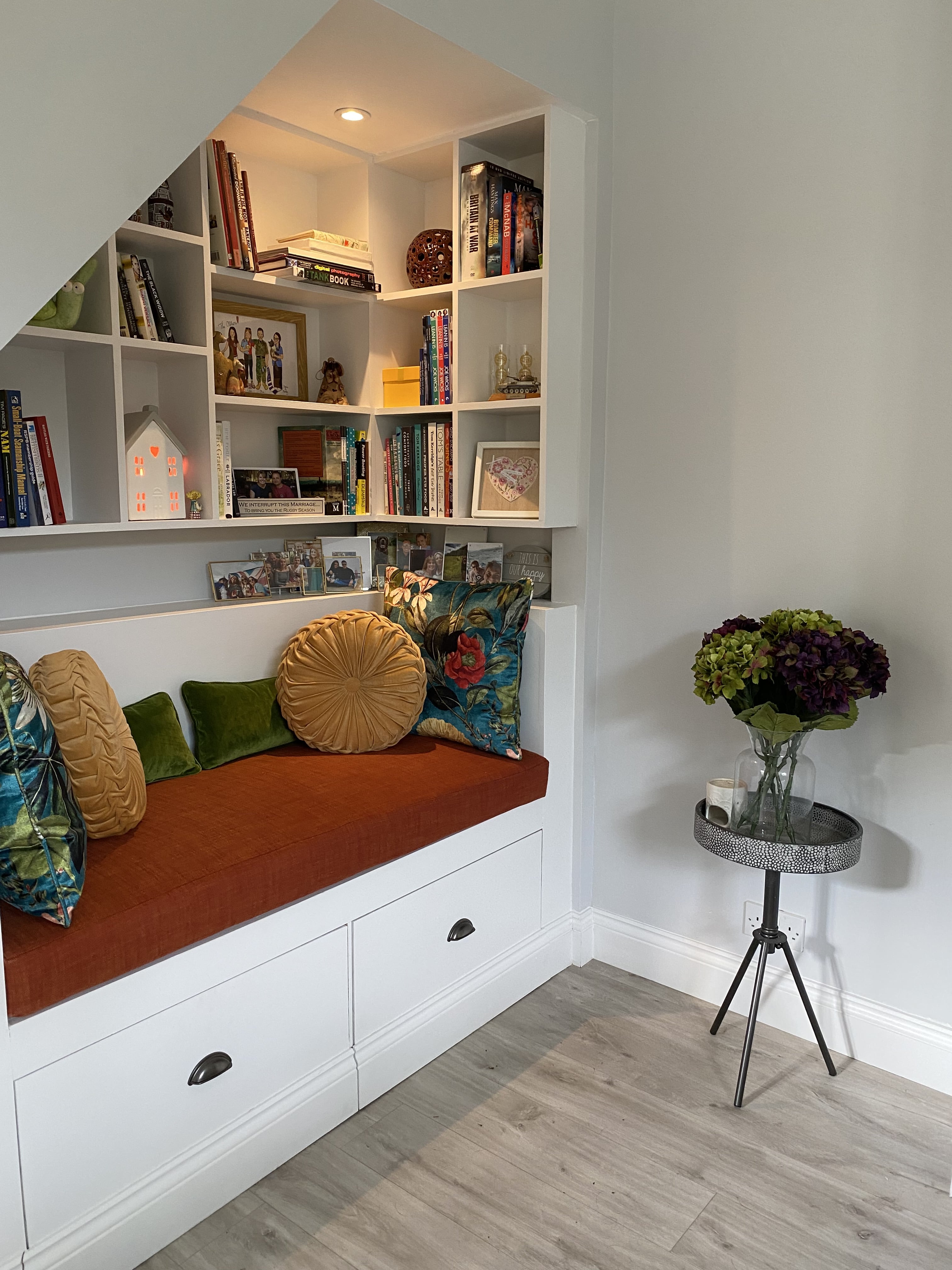
Bench Seating: Comfort Meets Versatility
Bench seating has emerged as one of the latest trends in interior design for dining areas and I’m mostly here for it, with some cautionary advice around following trends with such large pieces of furniture!
I think there’s an important distinction to make between fixed bench seating, otherwise known as banquette seating, and loose cushion bench seating.
You often see banquette seating with a fluted design in restaurants or pubs and they’re becoming more and more popular in people’s homes.
But, I would advise against it, because they’re fixed so you can’t change anything about them and they feel quite upright and hard even if they might look great.
They take a huge amount of fabric and are a very dominant, fixed feature that you have to love for at least 10 years and more, which is quite an investment.
It’s like a sofa that you can’t move and if you go off the colour or want to repaint your kitchen, it can’t be easily changed.
That’s one of the issues with following a trend, you may love it now, but what happens when you change the paint colour in your kitchen, or there’s a leak that damages it, or someone spills something on the seat, it’s not an easy fix if it’s attached to the kitchen floor and wall.
Plus if everyone is going for them how unique and individual are they? And most people are crying out for storage and some of these fixed style bench seating won’t allow for this.
That’s why my suggestion would be to opt for loose cushion bench seating, where you have the wooden bench in place and then decorate it with box seat cushions and scatter cushions.
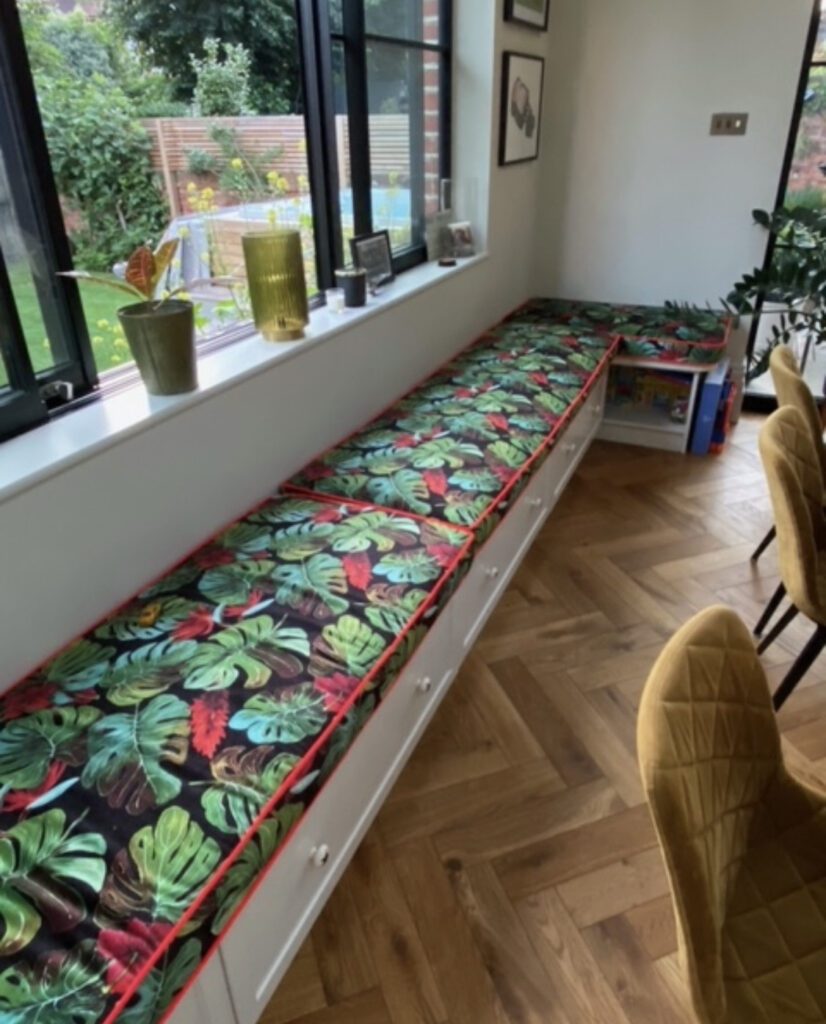
Bench seating works really well in kitchens
Or have the back section designed like a headboard on brackets that you can easily remove and change if necessary, which is much more versatile.
The best part of this style of bench seating using loose cushions is the flexibility and versatility, you can just switch out the cushions with different colours and fabrics as and when you please depending on the season or how you want the room to feel, more cosy in the winter and more bright and vibrant in the summer.
And you can add accents with the scatter cushions, as all bench seating needs back support to make it comfortable, so having cushions in different shapes and sizes really enhances the look and feel.
Loose cushion bench seating is also the more durable option because you can rotate the cushions or turn them over if there’s a spillage.
“The best part of this style of bench seating using loose cushions is the flexibility and versatility”
You won’t find a better way to take advantage of some of the smaller or more unconventional spaces in your house than bench seating. Those spots where furniture won’t fit, but you don’t just want it left empty.
It’s the perfect solution for little alcoves, window seating, hallways, under stairs and it can make a real impact to an otherwise dead space.
I’ve tackled bench seating projects before and honestly, the outcomes are fantastic with the right fabrics.
I had a customer called Crissi, who also happened to be a neighbour. We both live in cottages and under the stairs is quite open, so I’ve got an antique chesterfield sofa under mine, but she wanted to create a reading nook under hers.
She enlisted the help of a carpenter to build a base with storage, while I created a large seat cushion with an array of scatter cushions.
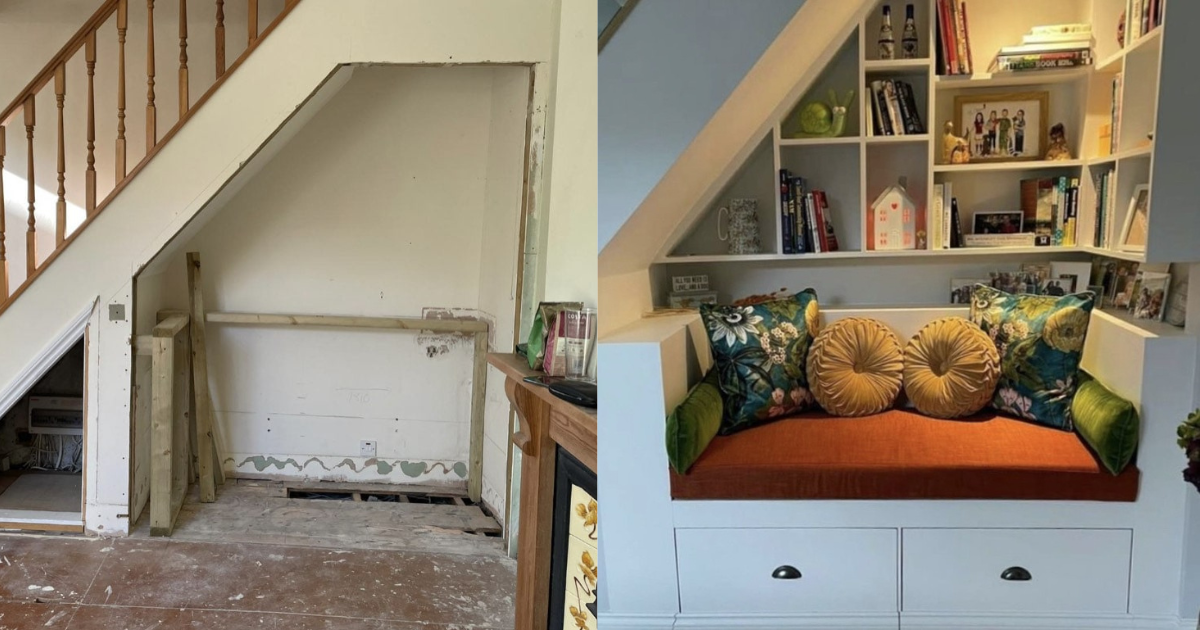
Crissi’s reading nook before and after
We didn’t just go for a solid colour, instead we chose an assortment of patterns on the back cushions and a variety of different sized scatter cushions, along with a solid seat cushion and it was a really great example of how bench seating can be executed well.
Something to think about though, is where the bench seating is going to be placed in your home because that will affect what fabrics are available to you.
If it’s in front of a window, for example, which is a common application of bench seating, then you have to consider how the fabric will react to being exposed to UV light.
In that case, I would avoid natural materials like cottons and linens and if you do go for them, they would need to be quite a light or neutral colour because with anything too dark, you’ll see the fabric fade really quickly.
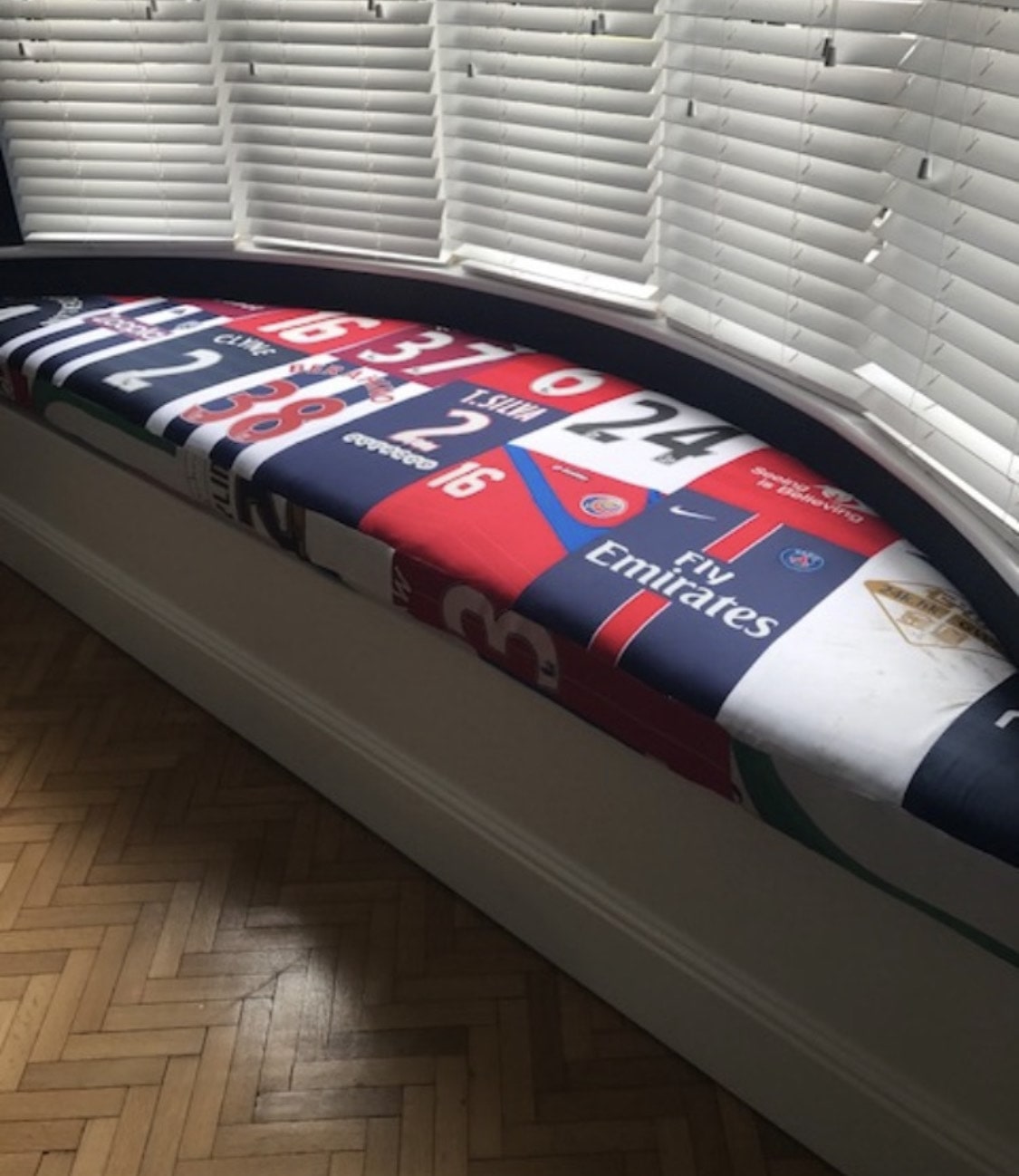
If your bench seating is in front of a window, it’s important to use a fabric that won’t fade easily
Or if you’re set on those particular fabrics, then you can add a UV protector to your window, that doesn’t block out the light, but it’s just a clear screen that will stop your fabrics fading.
If any of my clients are ever redesigning an area or want a radiator covered up, I’ll always suggest bench seating as an option well worth considering.
It’s really easily done and the fabric and foam for the cushions can be cut to fit the space perfectly.
And, as is the benefit with any reupholstery, the design, style, comfort and colour can be completely personalised to your vision.
Do you have an area of your home that’s not fulfilling its potential, and you’re considering bench seating? Or do you have a bench but are looking for some stunning cushions to add to it? Drop me a line for an initial, no-obligation quote by filling in the online contact form. Alternatively, you can email me directly at hello@test.vintiqueupholstery.com or call me on 07764 182 783.
Stay up to date
Keep up to date with the latest upholstery news and trends, delivered directly to your inbox.