Re-upholstering Benefits vs. Buying New Furniture
In today’s world a ‘throw-away’ culture exists where people are very quick to discard rather than update, fix or repair.
In fairness, when it comes to most things in life, whether it’s cars, kitchen utensils, technology or almost anything else, buying a new item comes with more choices and better quality and so it’s understandable, but this is not the case when it comes to sofas or chairs.
The benefits to re-upholstering an old chair or sofa significantly out-weigh the benefits of buying new, whether it comes down to sustainability, durability, value or a number of other factors, re-upholstering wins every time.
But, before we get into that, it’s important to distinguish the two different types of re-upholstery, traditional and modern.
Traditional upholstery techniques and stuffings are used within antique furniture, with coil springs, horsehair and lots of hand stitching, stuffing and sewing involved in the process.
Whereas modern upholstery tends to use zigzag springs and foam and this makes a difference in terms of labour time and therefore cost.
Value:
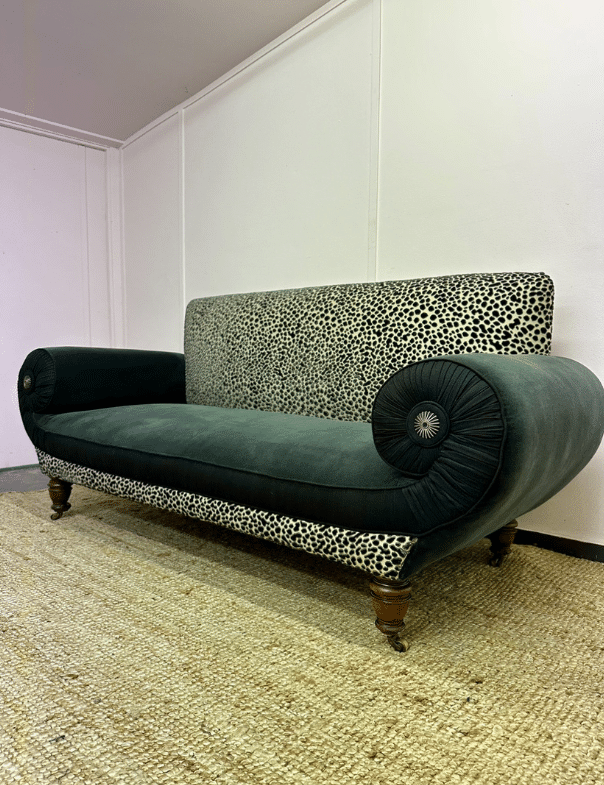
A sofa that I reupholstered myself with Nobilis fabric
It will come as no surprise that for the most part it’s cheaper to go and buy a new sofa or chair from a major retailer, because they’re mass produced.
But, this does not necessarily make it a more cost effective option in the long run.
Modern furniture that you buy from stores is predominantly full of chipboard and cardboard, it’s really poorly made being handed down the production line with little care and the best fillings and fabrics are not being used.
As a result, you’re lucky if the piece of furniture lasts four years, and it will probably begin to show its age within the first year or two, as it’s built specifically with cost not durability in mind.
I’m on lots of Facebook interiors groups and see horror stories posted daily where the showroom furniture doesn’t match the furniture delivered. That’s the difference between mass produced and bespoke furniture.
When working with an experienced upholsterer like myself, I can advise you on the best fillings and fabrics to be able to reinvent your furniture with reupholstery in a much more robust way, with a bespoke style and which suits your home and style.
“Choosing to have your sofa or chair reupholstered can be the much better value option”
This will then last ten years and beyond, depending on how you look after it, so when you consider how often you will have to replace new furniture, choosing to have your sofa or chair reupholstered can actually be the much better value option.
And when it comes to antique furniture in particular, it can be reupholstered traditionally and you’re preserving the history of the piece while retaining its value.
An antique Howard & Sons sofa in fairly good condition dating back to 1850 for example, can fetch up to £25,000 at auction.
If you buy an unrestored item like this for much less and have it reupholstered, choosing your own fabric that suits your style, the sky is the limit in terms of its value.
While this may not be the case when it comes to modern sofas or chairs, they are still worth getting reupholstered, as the bespoke product you have delivered back to you, is priceless compared to anything store bought.
Preserving history:
A lot of the time with these more traditional pieces of furniture, they’re one-of-a-kind and quite often the company doesn’t exist anymore or they no longer make that style, so throwing it away to buy something new is destroying a piece of history.
This is such a shame because an item of furniture that could hold sentimental value and be handed down generations, instead gets replaced by a modern sofa that doesn’t compare in prestige or quality.
Environment:
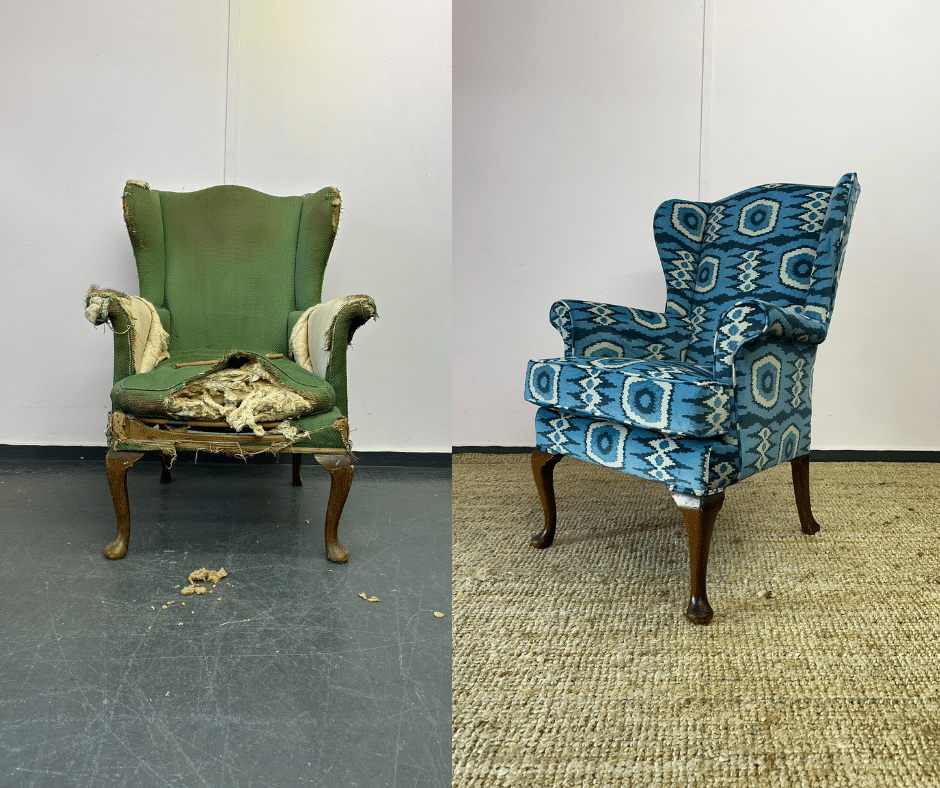
Before and after of a chair I reupholstered with Linwood fabric
When furniture of any age is thrown away, it’s incinerated, which is terrible for the environment.
Recycling is a common part of people’s daily lives and almost everyone does it with an understanding that they’re contributing to the health of the environment.
But, for some reason, this has not translated to the world of furniture, as people are more likely to throw away their old sofa and buy a new one from a manufacturer that is exhausting the planet’s natural resources.
“Getting your old sofa reupholstered is the more sustainable and eco-friendly option”
Reupholstering needs to be considered in the same vein as recycling any other everyday item, as the more sustainable and eco-friendly option when your sofa or chair has seen better days.
I cannot tell you the amount of times I’ve seen chairs or sofas discarded on the side of the road or in skips, sealing its fate, despite the fact that passing it on to someone else is the far greener option and they may see the beauty in the furniture and have it reupholstered instead.
Health:
Not only does choosing reupholstery help the health of the planet, but it’s also the healthier option for each individual.
The materials in modern, mass-produced sofas are far more toxic than those used in traditional furniture, being full of flame-retardants and petrochemicals.
An upholsterer can help reduce these toxins by advising on better fillings and fabrics. Every piece of furniture sold in a store is treated with flame retardant chemicals, but this doesn’t need to be the case.
These chemicals can cause cancer, infertility and neuro-toxicity in children, which can lead to behavioural problems and reduced IQ.
Personalisation:
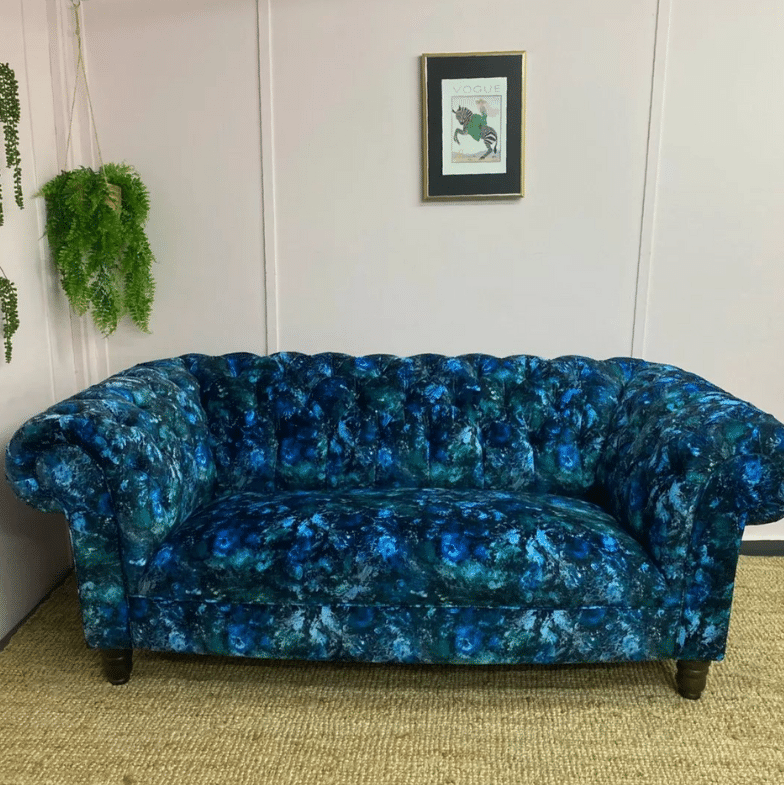
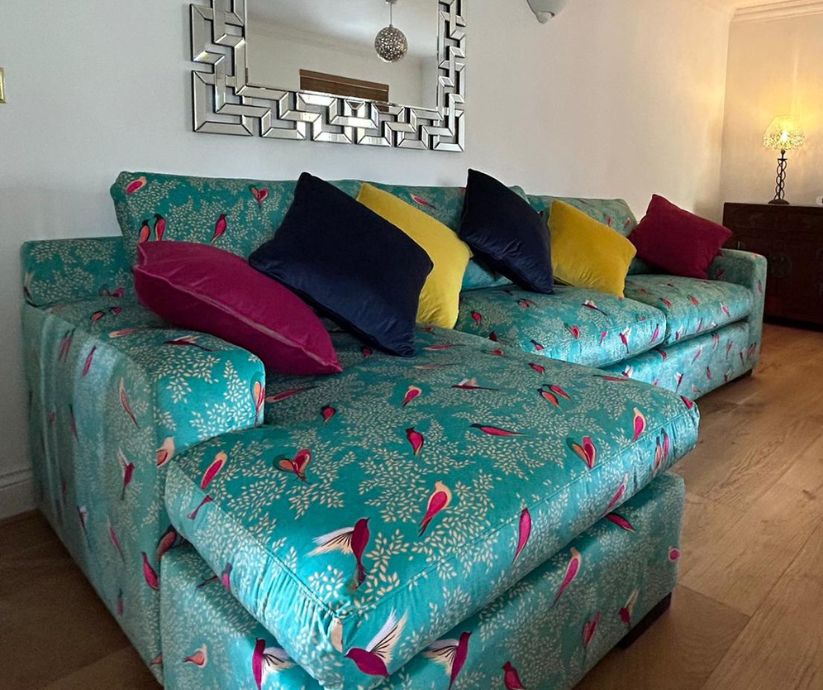
A beautiful sofa I reupholstered with Arley House fabric
It’s not all about practical reasons, however, reupholstery is also the far better option when it comes to personalisation of style, whether it’s modern or traditional.
I can take the bare bones of any sofa, chair, chaise, footstool, headboard etc and improve it.
When you buy from a store, you will most likely get the option of one cheap fabric in around twelve colours at most, and most will be neutrals.
When you come to an upholsterer, like myself, the possibilities are endless.
We can work with countless fabrics, textures, colours, styles and anything else the customer might desire. I particularly enjoy personalising with finishing details like piping and trims.
“When you come to an upholsterer, the possibilities are endless”
And not only will the piece of furniture be entirely personalised from a style standpoint, I can also work within your budget, making changes here and there to make sure you are left with a product that you love and it’s not going over what you were willing to spend.
See me as your interior designer for your furniture, ensuring the sofa or chair you choose fits the room and your home in terms of design and practicality and I advise on all the finishing details.
The personalised aspect of working with an upholsterer means you are left with a piece of furniture that is entirely unique and unlike anything you will have seen in anyone else’s home
Ultimately what it comes down to is trust.
Once a piece of furniture leaves the store of a major retailer, their job is done, the money has been made and there is nothing more to it.
You’ve dealt with a sales person not an experienced upholsterer and if there’s a problem it’s a minefield to resolve and the process is purposely slow and difficult.
Just the other day, I visited a customer’s house whose chairs I reupholstered eight years ago and they looked brand new and that brought me a real sense of pride.
As a result, she’s having four more chairs reupholstered, as she has seen first-hand the benefits of having a piece of furniture reinvigorated in a bespoke manner rather than throwing it out and buying new.
So, if you have a chair, sofa, headboard or footstool or anything covered in fabric, that has seen better days and you were thinking of throwing it away, take it to an upholsterer and I promise you won’t regret it.
Do you have a sofa that needs a little love to fulfil its potential? Or do you have the perfect one, but it needs a little revamp? Drop me a line for an initial, no-obligation quote by filling in the online contact form. Alternatively, you can email me directly at hello@test.vintiqueupholstery.com or call me on 07764 182 783.
Stay up to date
Keep up to date with the latest upholstery news and trends, delivered directly to your inbox.